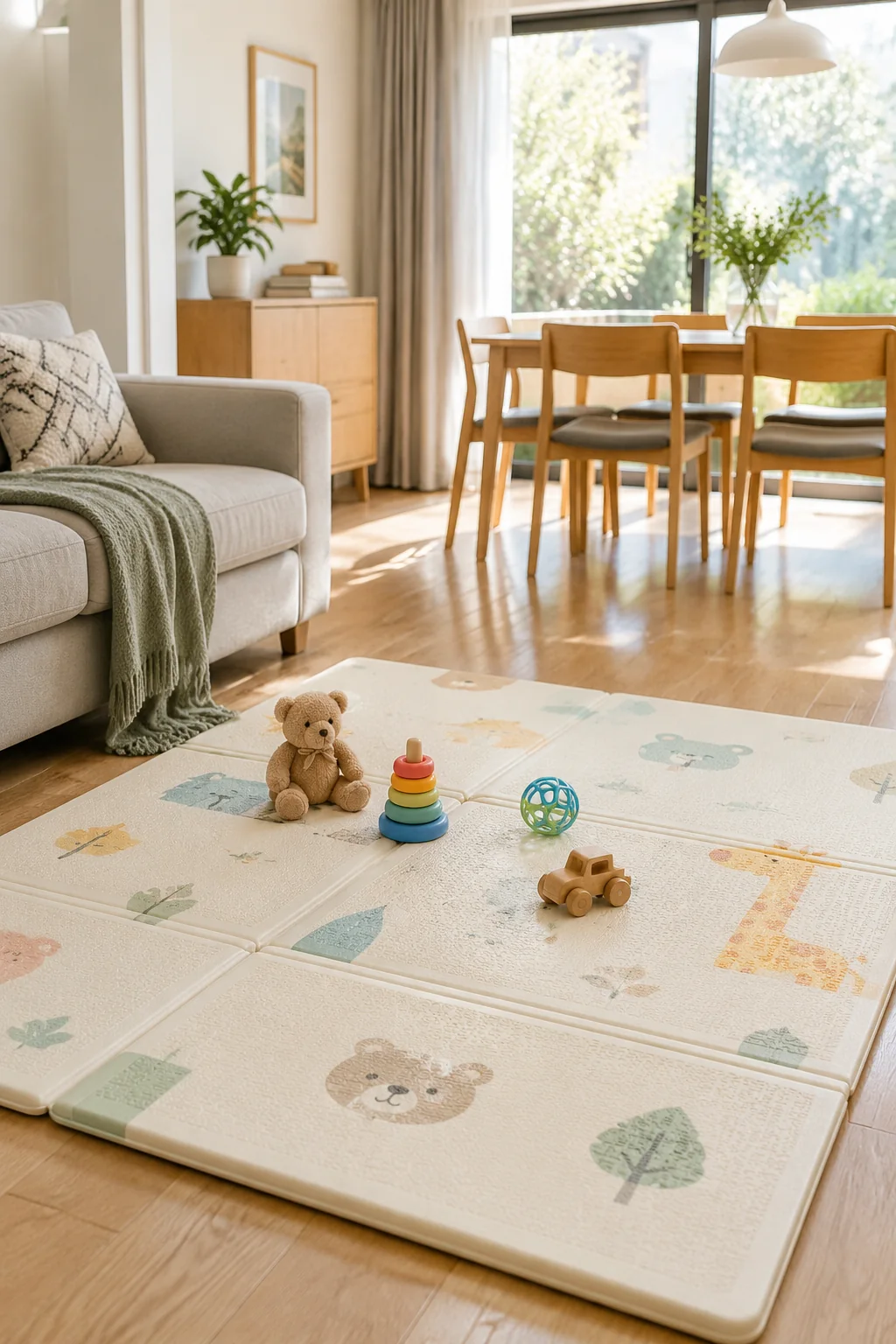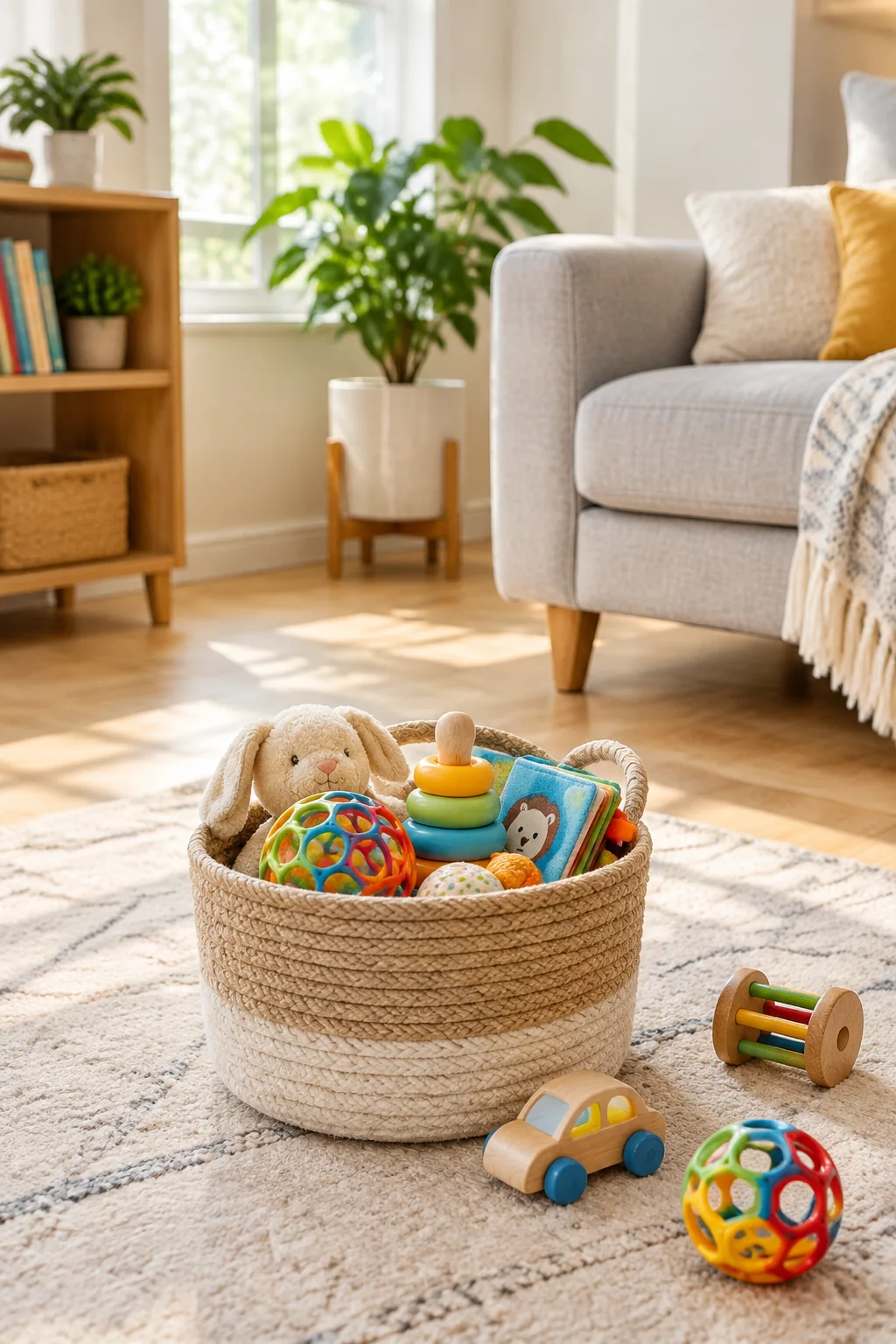
The living room is also the play area, and a large toy bin makes every object available but cleanup feel endless.
More toys do not guarantee more useful play, and small loose pieces can be inappropriate for babies depending on age and product guidance.
Offer a few varied, age-appropriate toys at a time, follow labels and recalls, and remove any damaged or small-part item from reach.
The short version
Buy for the routine you repeat.
Start with the format that removes the most friction from your day, then compare packaging, directions, upkeep, and return terms. A product that performs one clear job is usually a better buy than a bundle that creates five new steps.
Start with real life, not the product page
The living room is also the play area, and a large toy bin makes every object available but cleanup feel endless. That is the useful starting point because product pages are designed to make every feature feel important. Your actual routine exposes which features matter: how quickly a cap opens, whether a texture layers under something else, where the item dries or charges, and how much attention you can give it on an ordinary weekday.
More toys do not guarantee more useful play, and small loose pieces can be inappropriate for babies depending on age and product guidance. Before opening a dozen tabs, write down the one inconvenience you want to remove. Then set a boundary around budget, storage, fragrance preference, and the return period you need. Those constraints make comparison easier and help keep a curious purchase from becoming clutter.
Three product directions worth comparing
These are formats rather than ranked products. They are intended to help you narrow a large category without pretending that one option is universal. Check current labels, directions, availability, and seller policies before purchasing.
Best for early reaching and handling
Soft grasping toys
Look for: secure seams, washable care, and no loose parts. The most useful listing will make format, amount, directions, and return terms easy to find rather than hiding them behind lifestyle claims.
The tradeoff: fabric needs regular cleaning and drying. Decide whether that inconvenience is acceptable before upgrading size or buying more than one.
Browse current optionsBest for repeat play as coordination develops
Stacking cups or rings
Look for: age guidance, smooth edges, and easy cleaning. The most useful listing will make format, amount, directions, and return terms easy to find rather than hiding them behind lifestyle claims.
The tradeoff: small pieces need careful age-appropriate supervision. Decide whether that inconvenience is acceptable before upgrading size or buying more than one.
Browse current optionsBest for floor play and varied textures or sounds
Simple activity toy
Look for: stable construction, safe volume, and battery compartment security. The most useful listing will make format, amount, directions, and return terms easy to find rather than hiding them behind lifestyle claims.
The tradeoff: more features and parts can mean more cleaning. Decide whether that inconvenience is acceptable before upgrading size or buying more than one.
Browse current optionsPut the purchase into a routine
A useful product should have a clear entry and exit point: where you store it, when you use it, what comes immediately before and after, and how you know when it is not working for you. This four-step version keeps the routine observable.
- 01
Check each toy's age label and condition.
- 02
Offer a small selection on a clear supervised play surface.
- 03
Rotate based on interest rather than a strict schedule.
- 04
Inspect, clean, and store toys according to instructions.
Use the directions on the actual product as the authority. For baby products, follow current manufacturer instructions and applicable safety guidance, and consult a qualified professional for health or developmental questions. For beauty products, qualified professional advice matters more than a general buying guide when health questions arise.
The checkout checklist
Pause on the cart page and verify the unglamorous details. They are often the difference between a product that joins the routine and one that waits in a drawer.
- Follow age recommendations
- Check for choking-size parts and damage
- Keep play supervised
- Choose washable or easy-clean items
- Store toys out of sleep spaces
What not to overbuy
Shopping becomes expensive when experimentation and commitment happen at the same time. Start with one format, learn how it fits your home and routine, and only then decide whether a backup, companion product, or larger size makes sense.
- Using toys with loose or broken parts
- Leaving toys in a crib during sleep
- Buying by milestone promises
Common questions
How many toys should be out?
A few varied options can make cleanup manageable. Follow the child's interest rather than buying to a fixed number.
Are electronic toys necessary?
No. Simple objects designed for the child's age can support varied play. Check sound levels, batteries, and instructions for any electronic toy.
How often should toys be rotated?
Rotate when interest changes or cleanup becomes difficult; there is no required schedule.
How this guide was made
Scenario first, claims second.
Glow Decode developed this guide around common use constraints, product-format tradeoffs, and publicly available label or manufacturer information. We did not assign ratings or claim hands-on testing. Product ranges and directions change, so verify details with the seller or manufacturer before use.
Last editorial review: September 24, 2026. For corrections, email hello@glowdecode.com.